Hall of Influence
People who shaped history across a range of fields and societies.
Photographs, historical portraits or later depictions; not every person has an authentic portrait.

Mbzt · CC BY 3.0 · Wikimedia Commons
Hammurabi
1810 BCE – 1750 BCE
Amorite king of Babylon (c. 1792–1750 BCE) who brought most of Mesopotamia under his rule and is known for the law stele that bears his name.
PoliticsRulers of antiquityMbzt · CC BY 3.0 · Wikimedia Commons

Unknown · CC0 · Wikimedia Commons
Hatshepsut
1507 BCE – 1458 BCE
Female pharaoh of the Eighteenth Dynasty who ruled Egypt first as regent and then as king, known for her building projects and the trading expedition to Punt.
PoliticsRulers of antiquityUnknown · CC0 · Wikimedia Commons

Pbuergler · CC BY-SA 3.0 · Wikimedia Commons
Ramesses II
1303 BCE – 1213 BCE
Pharaoh of the 19th Dynasty who ruled Egypt from c. 1279 to 1213 BCE. He campaigned in the Levant, concluded a peace treaty with the Hittites after the Battle of Kadesh of which both versions survive, and commissioned monuments such as Abu Simbel and the Ramesseum.
PoliticsRulers of antiquityPbuergler · CC BY-SA 3.0 · Wikimedia Commons

Mohammad Reza Domiri Ganji محمدرضا دومیری گنجی · CC BY-SA 4.0 · Wikimedia Commons
Cyrus the Great
600 BCE – 530 BCE
Founder of the Achaemenid Persian Empire, which under his rule came to include Media, Lydia and Babylonia and grew into the largest empire of its time.
PoliticsRulers of antiquityMohammad Reza Domiri Ganji محمدرضا دومیری گنجی · CC BY-SA 4.0 · Wikimedia Commons

พระมหาเทวประภาส วชิรญาณเมธี (ผู้ถ่าย-ปล่อยสัญญาอนุญาตภาพให้นำไปใช้ได้เพื่อการศึกษาโดยอยู่ภา่ยใต้ cc-by-sa-3.0) ผู้สร้างสรรค์ผลงาน/ส่งข้อมูลเก็บในคลังข้อมูลเสรีวิกิมีเดียคอมมอนส์ - เทวประภาส มากคล้าย · CC BY-SA 3.0 · Wikimedia Commons
Gautama Buddha
563 BCE – 483 BCE
Wandering teacher from the north-east of the Indian subcontinent on whose teaching Buddhism is based. His dates are disputed: traditionally ca. 563–483 BCE, while many modern scholars place his death ca. 410–400 BCE.
ReligionFounders & teachersพระมหาเทวประภาส วชิรญาณเมธี (ผู้ถ่าย-ปล่อยสัญญาอนุญาตภาพให้นำไปใช้ได้เพื่อการศึกษาโดยอยู่ภา่ยใต้ cc-by-sa-3.0) ผู้สร้างสรรค์ผลงาน/ส่งข้อมูลเก็บในคลังข้อมูลเสรีวิกิมีเดียคอมมอนส์ - เทวประภาส มากคล้าย · CC BY-SA 3.0 · Wikimedia Commons

Anonymous Chinese painter of the Western Han period · Public domain · Wikimedia Commons
Confucius
551 BCE – 479 BCE
Chinese thinker whose ethics of virtue, duty and family shaped East Asia for 2,500 years.
PhilosophyClassical thinkersAnonymous Chinese painter of the Western Han period · Public domain · Wikimedia Commons

Copy of Lysippos (?) · Public domain · Wikimedia Commons
Socrates
470 BCE – 399 BCE
Athenian philosopher who used critical dialogue to question virtue, knowledge and justice. His thought is known chiefly through his pupils, not his own writings.
PhilosophyClassical thinkersCopy of Lysippos (?) · Public domain · Wikimedia Commons

Marie-Lan Nguyen · Public domain · Wikimedia Commons
Plato
428 BCE – 348 BCE
Greek philosopher and founder of the Academy in Athens. His dialogues examine knowledge, ethics and the organisation of society.
PhilosophyClassical thinkersMarie-Lan Nguyen · Public domain · Wikimedia Commons

After Lysippos · Public domain · Wikimedia Commons
Aristotle
384 BCE – 322 BCE
Greek philosopher who established logic, biology, ethics and politics as systematic fields of study.
PhilosophyClassical thinkersAfter Lysippos · Public domain · Wikimedia Commons

Unknown author · Public domain · Wikimedia Commons
Alexander the Great
356 BCE – 323 BCE
Macedonian king who conquered the Persian Empire and advanced into South Asia. His campaigns spread Greek culture and also involved destruction and enslavement.
MilitaryAncient & medieval commandersUnknown author · Public domain · Wikimedia Commons

Photo Dharma from Sadao, Thailand · CC BY 2.0 · Wikimedia Commons
Ashoka
304 BCE – 232 BCE
Third emperor of the Maurya Empire (c. 268–232 BCE), who after the war in Kalinga pursued a policy of dhamma that he had recorded in rock and pillar inscriptions.
PoliticsRulers of antiquityPhoto Dharma from Sadao, Thailand · CC BY 2.0 · Wikimedia Commons

Domenico Fetti · Public domain · Wikimedia Commons
Archimedes
287 BCE – 212 BCE
Greek mathematician and engineer from Syracuse who calculated areas and volumes, investigated the laws of the lever and of floating bodies, and died when the Romans took his city.
ScienceMathematics & computingDomenico Fetti · Public domain · Wikimedia Commons

Unknown (18??–18??) · Public domain · Wikimedia Commons
Qin Shi Huang
259 BCE – 210 BCE
First emperor of a unified China, who standardised administration, writing and measures. His authoritarian rule mobilised large numbers of forced labourers for wars and construction projects.
PoliticsRulers of antiquityUnknown (18??–18??) · Public domain · Wikimedia Commons

Fratelli Alinari · Public domain · Wikimedia Commons
Hannibal
247 BCE – 183 BCE
Carthaginian general who crossed the Alps into Italy in the Second Punic War and inflicted a heavy defeat on Rome at Cannae, but ultimately lost the war.
MilitaryAncient & medieval commandersFratelli Alinari · Public domain · Wikimedia Commons

Ángel M. Felicísimo from Mérida, España · Public domain · Wikimedia Commons
Julius Caesar
100 BCE – 44 BCE
Roman general and statesman whose conquests and seizure of power ushered in the end of the Republic.
MilitaryAncient & medieval commandersÁngel M. Felicísimo from Mérida, España · Public domain · Wikimedia Commons

Louis le Grand · Public domain · Wikimedia Commons
Cleopatra VII
69 BCE – 30 BCE
Last reigning ruler of Ptolemaic Egypt. She used political and personal alliances in an effort to preserve her kingdom in the face of Rome.
PoliticsRulers of antiquityLouis le Grand · Public domain · Wikimedia Commons

Justin Benttinen · CC BY-SA 4.0 · Wikimedia Commons
Augustus
63 BCE – 14
First Roman emperor, who established the principate after the civil wars, received the honorific Augustus in 27 BCE and ruled the Roman Empire for more than forty years.
PoliticsRulers of antiquityJustin Benttinen · CC BY-SA 4.0 · Wikimedia Commons

Unknown artist · Public domain · Wikimedia Commons
Jesus of Nazareth
6 BCE – 30
Jewish preacher from Galilee and central figure of Christianity. Historians place his birth around 6–4 BCE and his crucifixion around 30–33 CE; Christians believe he is the risen Son of God.
ReligionFounders & teachersUnknown artist · Public domain · Wikimedia Commons

Jules Maurice Gaspard · Public domain · Wikimedia Commons
Hypatia
355 – 415
Alexandrian mathematician, astronomer and Neoplatonist philosopher. She taught a circle of pupils and was killed by a Christian mob in 415.
ScienceMathematics & computingJules Maurice Gaspard · Public domain · Wikimedia Commons

بلال الدويك · CC BY-SA 3.0 · Wikimedia Commons
Muhammad
570 – 632
Arab religious and political leader associated with the origins of Islam. Muslims regard him as the final prophet and the Quran as God's revelation to him.
ReligionFounders & teachersبلال الدويك · CC BY-SA 3.0 · Wikimedia Commons

Likely to be Zhang Xuan (张萱) · Public domain · Wikimedia Commons
Wu Zetian
624 – 705
Chinese empress and the only woman to rule China as emperor. In 690 she founded the Zhou dynasty, which interrupted the Tang dynasty until 705.
PoliticsMonarchs & emperors (from 500)Likely to be Zhang Xuan (张萱) · Public domain · Wikimedia Commons

Charlemagne. Autorité émettrice de monnaie indéterminé. Atelier monétaire. Émetteur · Public domain · Wikimedia Commons
Charlemagne
748 – 814
Frankish king and, from 800, emperor who brought large parts of western and central Europe under his rule. His educational and ecclesiastical reforms accompanied violent conquests and forced conversion to Christianity.
PoliticsMonarchs & emperors (from 500)Charlemagne. Autorité émettrice de monnaie indéterminé. Atelier monétaire. Émetteur · Public domain · Wikimedia Commons

Adolph Boÿ, engraved by Jeremias Falck. Used as the frontispiece to Johannes Hevelius, Selenographia, 1647 · Public domain · Wikimedia Commons
Ibn al-Haytham (Alhazen)
965 – 1040
Scholar from Basra who worked in Cairo under the Fatimids. His Kitāb al-Manāẓir (Book of Optics) deals with light and vision and was later translated into Latin; in the West he is known as Alhazen. His birth and death years are approximate.
SciencePhysics, chemistry & astronomyAdolph Boÿ, engraved by Jeremias Falck. Used as the frontispiece to Johannes Hevelius, Selenographia, 1647 · Public domain · Wikimedia Commons

Sculptor Daniels, John K. 1875-1978 Photo: Sharon Mollerus · CC BY 2.0 · Wikimedia Commons
Leif Erikson
970 – 1020
Norse explorer from Greenland who, according to the Icelandic sagas, reached Vinland around the year 1000. The sagas partly contradict one another; the link between Leif and the Norse site of L'Anse aux Meadows is an inference.
ExplorationSeafarersSculptor Daniels, John K. 1875-1978 Photo: Sharon Mollerus · CC BY 2.0 · Wikimedia Commons

Tosa Mitsuoki (1617 - 1691) · Public domain · Wikimedia Commons
Murasaki Shikibu
973 – 1014
Japanese writer and lady-in-waiting at the Heian court, author of 'The Tale of Genji' (early 11th century), often called one of the world's earliest novels. Her dates are approximate, and her personal name has not survived.
Arts & cultureLiteratureTosa Mitsuoki (1617 - 1691) · Public domain · Wikimedia Commons

National Library of Medicine · No restrictions · Wikimedia Commons
Ibn Sina (Avicenna)
980 – 1037
Persian physician and philosopher from Central Asia. His 'Canon of Medicine' was a standard work for centuries in the Islamic world and in Europe, and his philosophy influenced both Islamic and Christian thinkers.
ScienceLife, medicine & earthNational Library of Medicine · No restrictions · Wikimedia Commons

Unknown author · Public domain · Wikimedia Commons
Hildegard of Bingen
1098 – 1179
German Benedictine abbess who recorded visions, composed liturgical songs and the sung play Ordo Virtutum, and wrote on nature and medicine. In 2012 Pope Benedict XVI named her a Doctor of the Church.
Arts & cultureMusicUnknown author · Public domain · Wikimedia Commons

Giovio, Paolo, 1483-1552 · Public domain · Wikimedia Commons
Saladin
1137 – 1193
Founder of the Ayyubid dynasty and sultan of Egypt and Syria. He defeated the crusader army at Hattin in 1187, took Jerusalem and then fought the Third Crusade.
MilitaryAncient & medieval commandersGiovio, Paolo, 1483-1552 · Public domain · Wikimedia Commons

Unknown author · Public domain · Wikimedia Commons
Genghis Khan
1162 – 1227
Founder of the Mongol Empire, the largest contiguous land empire in history.
MilitaryAncient & medieval commandersUnknown author · Public domain · Wikimedia Commons

Unknown author · Public domain · Wikimedia Commons
Marco Polo
1254 – 1324
Venetian traveller whose account of Asia strongly influenced European views. His travel book combines personal experience with accounts by others and includes disputed details.
ExplorationOverland travellersUnknown author · Public domain · Wikimedia Commons

attributed to Abraham Cresques · Public domain · Wikimedia Commons
Mansa Musa
1280 – 1337
Ruler of the West African Mali Empire, known for his pilgrimage to Mecca and support for Islamic scholarship. His empire was connected to gold trade, taxation and slavery.
PoliticsMonarchs & emperors (from 500)attributed to Abraham Cresques · Public domain · Wikimedia Commons
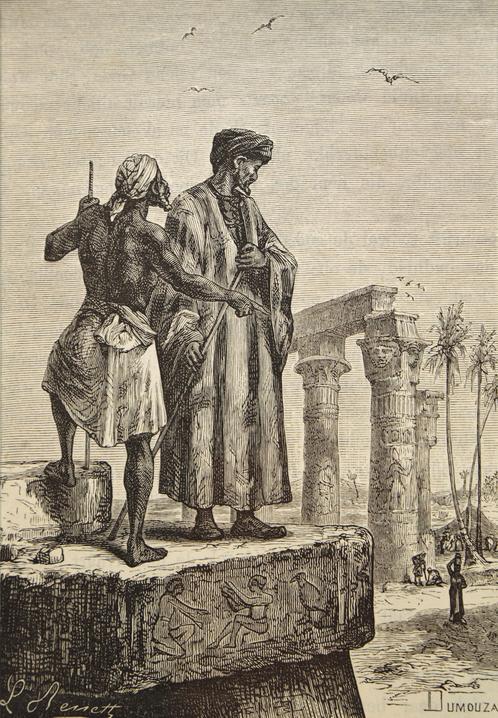
Léon Benett · Public domain · Wikimedia Commons
Ibn Battuta
1304 – 1369
Moroccan traveller and legal scholar who described large parts of Africa and Asia. His Rihla is an important, though not everywhere independently verifiable, source on the fourteenth century.
ExplorationOverland travellersLéon Benett · Public domain · Wikimedia Commons

Reda Kerbush · CC BY-SA 4.0 · Wikimedia Commons
Ibn Khaldun
1332 – 1406
North African historian, jurist and thinker from Tunis. In his Muqaddimah (1377) he analyses how group solidarity (ʿasabiyyah) brings dynasties to power and how it weakens over generations.
PhilosophyMiddle Ages to todayReda Kerbush · CC BY-SA 4.0 · Wikimedia Commons

Marcin Konsek · CC BY-SA 4.0 · Wikimedia Commons
Zheng He
1371 – 1433
Chinese admiral who led seven Ming expeditions across the Indian Ocean. The voyages combined diplomacy and trade with the exercise of military power.
ExplorationSeafarersMarcin Konsek · CC BY-SA 4.0 · Wikimedia Commons

Marsilar · CC BY-SA 4.0 · Wikimedia Commons
Sejong the Great
1397 – 1450
King of Joseon (Korea) from 1418 to 1450. During his reign the Korean alphabet Hangul was created and promulgated in 1446, and the court promoted science, agricultural knowledge and technology. No portrait from his time survives; the image shows the 2009 statue in Seoul.
PoliticsMonarchs & emperors (from 500)Marsilar · CC BY-SA 4.0 · Wikimedia Commons

Unknown · Public domain · Wikimedia Commons
Joan of Arc
1412 – 1431
French young woman who played a significant symbolic and military role during the Hundred Years' War. She said she acted on the direction of holy voices and was executed in 1431.
MilitaryAncient & medieval commandersUnknown · Public domain · Wikimedia Commons

Unknown · Public domain · Wikimedia Commons
Pachacuti
1418 – 1471
Fifteenth-century Sapa Inca to whom colonial chronicles attribute the expansion of Cusco into the empire of Tawantinsuyu; his dates and personal role are debated.
PoliticsMonarchs & emperors (from 500)Unknown · Public domain · Wikimedia Commons

Sebastiano del Piombo · Public domain · Wikimedia Commons
Christopher Columbus
1451 – 1506
Genoese sailor who reached the Caribbean under the flag of Castile from 1492. His voyages accelerated lasting contact between continents and ushered in violent colonisation.
ExplorationSeafarersSebastiano del Piombo · Public domain · Wikimedia Commons

Attributed to Francesco Melzi · Public domain · Wikimedia Commons
Leonardo da Vinci
1452 – 1519
Italian artist and investigator who combined painting with anatomy, engineering and close observation of nature. His notebooks contain both practical studies and speculative designs.
Arts & cultureVisual artsAttributed to Francesco Melzi · Public domain · Wikimedia Commons

Hans Holbein the Younger · Public domain · Wikimedia Commons
Desiderius Erasmus
1466 – 1536
Humanist from the Low Countries who combined classical scholarship with criticism of church and society. He advocated education, textual study and religious reform without a schism in the Church.
PhilosophyMiddle Ages to todayHans Holbein the Younger · Public domain · Wikimedia Commons

Amritpal Singh Mann . Painted by Jaimal Singh Naqqash (1860–1916), Mehtab Singh Naqqash (1871–1940), and Hukum Singh. · CC BY-SA 4.0 · Wikimedia Commons
Guru Nanak
1469 – 1539
Founder of Sikhism and first of the ten gurus of the Sikhs. His hymns appear in the Guru Granth Sahib; many details of his life story come from later, hagiographic sources (janamsakhis).
ReligionFounders & teachersAmritpal Singh Mann . Painted by Jaimal Singh Naqqash (1860–1916), Mehtab Singh Naqqash (1871–1940), and Hukum Singh. · CC BY-SA 4.0 · Wikimedia Commons

Sailko · CC BY 3.0 · Wikimedia Commons
Vasco da Gama
1469 – 1524
Portuguese navigator who made the first sea voyage from Europe to India in 1497–1499; his second expedition (1502–1503) involved violence against shipping and coastal cities.
ExplorationSeafarersSailko · CC BY 3.0 · Wikimedia Commons

Unknown author · Public domain · Wikimedia Commons
Nicolaus Copernicus
1473 – 1543
Astronomer and canon from Royal Prussia who set out in De revolutionibus (1543) a model in which the Earth and the other planets orbit the Sun.
SciencePhysics, chemistry & astronomyUnknown author · Public domain · Wikimedia Commons

Attributed to Daniele da Volterra · Public domain · Wikimedia Commons
Michelangelo Buonarroti
1475 – 1564
Florentine sculptor, painter, architect and poet of the High Renaissance, known for the Pietà, the David and the frescoes of the Sistine Chapel.
Arts & cultureVisual artsAttributed to Daniele da Volterra · Public domain · Wikimedia Commons

Unknown author · Public domain · Wikimedia Commons
Ferdinand Magellan
1480 – 1521
Portuguese navigator who began, for the Spanish crown, the expedition that became the first circumnavigation of the Earth. He died in the Philippines; Juan Sebastián Elcano completed the voyage with the survivors.
ExplorationSeafarersUnknown author · Public domain · Wikimedia Commons

Lucas Cranach the Elder · Public domain · Wikimedia Commons
Martin Luther
1483 – 1546
German theologian whose criticism of indulgences became a catalyst for the Reformation. His influential religious reforms coexisted with fierce polemic, including harmful anti-Jewish writings.
ReligionReformersLucas Cranach the Elder · Public domain · Wikimedia Commons

Circle of Titian · Public domain · Wikimedia Commons
Suleiman the Magnificent
1494 – 1566
Tenth Ottoman sultan (reigned 1520–1566). Under his rule Belgrade, Rhodes and much of Hungary were conquered and the kanun legislation was systematised; in Europe he is called 'the Magnificent', in Turkish 'Kanuni' (the Lawgiver).
PoliticsMonarchs & emperors (from 500)Circle of Titian · Public domain · Wikimedia Commons

Adriaen Thomasz. Key · Public domain · Wikimedia Commons
William of Orange
1533 – 1584
Nobleman of the House of Nassau, Prince of Orange and leader of the Dutch Revolt against King Philip II of Spain. As stadholder and councillor of the king he turned against the persecution of heretics and against centralisation; from 1568 he led the armed resistance and from 1572 the government of Holland and Zeeland. He strove for the unity of the Netherlands and for religious peace between Catholics and Protestants and was assassinated in Delft in 1584.
PoliticsLiberation leaders & reformersAdriaen Thomasz. Key · Public domain · Wikimedia Commons

Govardhan / Mir Ali Heravi · Public domain · Wikimedia Commons
Akbar
1542 – 1605
Mughal emperor from 1556 to 1605 who extended the empire over most of northern and central India. He reformed administration and taxation, brought Hindu Rajput rulers into his government and held religious debates at his court.
PoliticsMonarchs & emperors (from 500)Govardhan / Mir Ali Heravi · Public domain · Wikimedia Commons

Unknown author · Public domain · Wikimedia Commons
Yi Sun-sin
1545 – 1598
Korean admiral who repeatedly defeated Japanese invasion fleets with the Joseon navy during the Imjin War (1592–1598). He was killed in the naval battle of Noryang.
MilitaryCommanders & strategists (from 1500)Unknown author · Public domain · Wikimedia Commons

Justus Sustermans · Public domain · Wikimedia Commons
Galileo Galilei
1564 – 1642
Italian natural philosopher who combined telescopic observations with the study of motion. His defence of heliocentrism led to his condemnation by the Roman Inquisition.
SciencePhysics, chemistry & astronomyJustus Sustermans · Public domain · Wikimedia Commons

Attributed to John Taylor · Public domain · Wikimedia Commons
William Shakespeare
1564 – 1616
English playwright, poet and actor known for tragedies, comedies and history plays. His works are performed and reinterpreted around the world.
Arts & cultureLiteratureAttributed to John Taylor · Public domain · Wikimedia Commons

August Köhler [1] · Public domain · Wikimedia Commons
Johannes Kepler
1571 – 1630
German astronomer and mathematician who derived the laws of planetary motion from Tycho Brahe's observations, including elliptical planetary orbits.
SciencePhysics, chemistry & astronomyAugust Köhler [1] · Public domain · Wikimedia Commons

Achille Devéria · Public domain · Wikimedia Commons
Nzinga of Ndongo and Matamba
1583 – 1663
Queen of Ndongo and Matamba, in present-day Angola, who for decades resisted Portuguese expansion through diplomacy and war. She allied herself with the Dutch West India Company, among others; her state was itself involved in the slave trade. The portrait is a 19th-century depiction.
PoliticsMonarchs & emperors (from 500)Achille Devéria · Public domain · Wikimedia Commons

After Frans Hals · Public domain · Wikimedia Commons
René Descartes
1596 – 1650
French philosopher, mathematician and natural philosopher, known for 'I think, therefore I am', the separation of mind and body, and analytic geometry.
PhilosophyMiddle Ages to todayAfter Frans Hals · Public domain · Wikimedia Commons

Unknown author · Public domain · Wikimedia Commons
Abel Tasman
1603 – 1659
Dutch VOC navigator who, in 1642, became the first documented European to reach Tasmania and New Zealand. These lands had long been inhabited by Indigenous communities.
ExplorationSeafarersUnknown author · Public domain · Wikimedia Commons

Rembrandt · Public domain · Wikimedia Commons
Rembrandt van Rijn
1606 – 1669
Dutch painter, printmaker and draughtsman known for his use of light and penetrating portraits. His work includes biblical scenes, group portraits and numerous self-portraits.
Arts & cultureVisual artsRembrandt · Public domain · Wikimedia Commons

Godfrey Kneller · Public domain · Wikimedia Commons
Isaac Newton
1643 – 1727
English physicist and mathematician who formulated classical mechanics and the law of universal gravitation.
SciencePhysics, chemistry & astronomyGodfrey Kneller · Public domain · Wikimedia Commons
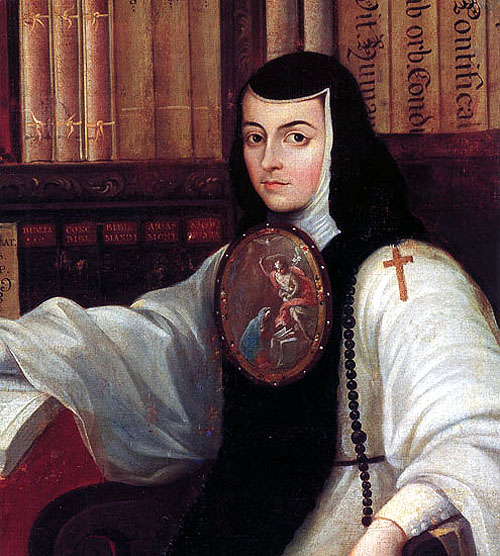
Miguel Cabrera · Public domain · Wikimedia Commons
Sor Juana Inés de la Cruz
1648 – 1695
Mexican poet, playwright and nun from New Spain. She is regarded as one of the most important writers of the Spanish-language Baroque and defended women's right to study in her 'Respuesta a Sor Filotea' (1691). Her year of birth is disputed: 1648 or 1651.
Arts & cultureLiteratureMiguel Cabrera · Public domain · Wikimedia Commons

Elias Gottlob Haussmann · Public domain · Wikimedia Commons
Johann Sebastian Bach
1685 – 1750
German composer and organist of the late Baroque, known for his counterpoint and for his cantatas, Passions and keyboard music. His work gained wide recognition only in the nineteenth century.
Arts & cultureMusicElias Gottlob Haussmann · Public domain · Wikimedia Commons

Nathaniel Dance-Holland · Public domain · Wikimedia Commons
James Cook
1728 – 1779
British naval officer and cartographer who charted large parts of the Pacific on three voyages (1768–1779); his voyages preceded British colonisation of inhabited territories.
ExplorationSeafarersNathaniel Dance-Holland · Public domain · Wikimedia Commons

Alexandre-François-Louis, comte de Girardin · Public domain · Wikimedia Commons
Toussaint Louverture
1743 – 1803
Leader of the Haitian Revolution, which grew from a slave uprising into a struggle against slavery and colonial rule. He became governor-general of Saint-Domingue and died in French captivity.
PoliticsLiberation leaders & reformersAlexandre-François-Louis, comte de Girardin · Public domain · Wikimedia Commons

Johann Nepomuk della Croce · Public domain · Wikimedia Commons
Wolfgang Amadeus Mozart
1756 – 1791
Salzburg composer who wrote operas, symphonies, chamber music and concertos. His works are central to the European classical repertoire.
Arts & cultureMusicJohann Nepomuk della Croce · Public domain · Wikimedia Commons

Louis Choris · Public domain · Wikimedia Commons
Kamehameha I
1758 – 1819
Hawaiian ruler who between 1782 and 1810 united the Hawaiian Islands into a single kingdom through war and negotiation. He made use of Western weapons and advisers but upheld the traditional kapu system. His year of birth is approximate.
PoliticsMonarchs & emperors (from 500)Louis Choris · Public domain · Wikimedia Commons

missing name · CC0 · Wikimedia Commons
Hokusai
1760 – 1849
Japanese ukiyo-e artist from Edo, known for the series Thirty-six Views of Mount Fuji (including 'The Great Wave off Kanagawa') and the sketchbooks of the Hokusai Manga.
Arts & cultureVisual artsmissing name · CC0 · Wikimedia Commons

Jacques-Louis David · Public domain · Wikimedia Commons
Napoleon Bonaparte
1769 – 1821
French emperor and general who conquered much of Europe and shaped modern civil law.
MilitaryCommanders & strategists (from 1500)Jacques-Louis David · Public domain · Wikimedia Commons

Joseph Karl Stieler · Public domain · Wikimedia Commons
Alexander von Humboldt
1769 – 1859
German naturalist and explorer who travelled through Spanish America in 1799–1804 and, through measurement, laid the foundations of plant geography. In his Kosmos he described nature as a coherent whole.
ScienceLife, medicine & earthJoseph Karl Stieler · Public domain · Wikimedia Commons

Joseph Karl Stieler · Public domain · Wikimedia Commons
Ludwig van Beethoven
1770 – 1827
German composer and pianist whose work marks the transition from Classical to Romantic music. From his late twenties he grew increasingly deaf and kept composing.
Arts & cultureMusicJoseph Karl Stieler · Public domain · Wikimedia Commons

José Gil de Castro · Public domain · Wikimedia Commons
Simón Bolívar
1783 – 1830
Venezuelan officer and statesman who played a key role in the wars of independence of Spanish South America and became president of Gran Colombia. That union broke apart in 1830.
PoliticsLiberation leaders & reformersJosé Gil de Castro · Public domain · Wikimedia Commons

James King · Public domain · Wikimedia Commons
Shaka
1787 – 1828
Founder of the Zulu Kingdom (king from about 1816). The picture of him rests on oral tradition and colonial-era accounts of varying reliability, and historians judge his role in the 'mfecane' differently.
MilitaryCommanders & strategists (from 1500)James King · Public domain · Wikimedia Commons

Credited to 'Mr. Grey' in Crispin Tickell's book 'Mary Anning of Lyme Regis' (1996) · Public domain · Wikimedia Commons
Mary Anning
1799 – 1847
English fossil collector and expert who uncovered important Jurassic marine reptiles. Her finds contributed to new understanding of extinct animals and the history of the Earth.
ScienceLife, medicine & earthCredited to 'Mr. Grey' in Crispin Tickell's book 'Mary Anning of Lyme Regis' (1996) · Public domain · Wikimedia Commons

Charles_Darwin_seated.jpg : Henry Maull (1829–1914) and John Fox (1832–1907) (Maull & Fox) [ 3 ] derivative work: Bea o · Public domain · Wikimedia Commons
Charles Darwin
1809 – 1882
British naturalist who developed the theory of evolution by natural selection. His theory explained common descent and the adaptation of organisms without a predetermined goal.
ScienceLife, medicine & earthCharles_Darwin_seated.jpg : Henry Maull (1829–1914) and John Fox (1832–1907) (Maull & Fox) [ 3 ] derivative work: Bea o · Public domain · Wikimedia Commons

Alexander Gardner · Public domain · Wikimedia Commons
Abraham Lincoln
1809 – 1865
Sixteenth president of the United States (1861–1865), who led the country through the Civil War. The self-taught son of a pioneer family in Kentucky won the election of 1860 on a platform opposing the expansion of slavery, after which eleven southern states seceded. With the Emancipation Proclamation of 1863 and the Thirteenth Amendment he made the abolition of slavery a war aim. A few days after the surrender of the main southern army he was shot dead in Washington.
PoliticsLeaders of the 20th centuryAlexander Gardner · Public domain · Wikimedia Commons

Antoine Claudet · Public domain · Wikimedia Commons
Ada Lovelace
1815 – 1852
British mathematician who wrote extensive notes on Charles Babbage's Analytical Engine. She recognised that such a machine could process more than numbers alone.
ScienceMathematics & computingAntoine Claudet · Public domain · Wikimedia Commons

Jacques Pilartz · Public domain · Wikimedia Commons
Otto von Bismarck
1815 – 1898
Prussian statesman who, as minister president from 1862, brought about German unification under Prussian leadership through three wars and was the first chancellor of the German Empire from 1871 to 1890. He introduced the world's first statutory social insurance, but fought Catholics and Social Democrats with emergency laws. With a system of alliances he kept the peace between the European great powers after 1871.
PoliticsLeaders of the 20th centuryJacques Pilartz · Public domain · Wikimedia Commons

John Jabez Edwin Mayall · Public domain · Wikimedia Commons
Karl Marx
1818 – 1883
German philosopher, economist and journalist who wrote the 'Communist Manifesto' (1848) with Friedrich Engels and analysed capitalism in 'Das Kapital'. His ideas influenced labour movements and socialist parties, and later communist states.
PhilosophyMiddle Ages to todayJohn Jabez Edwin Mayall · Public domain · Wikimedia Commons

Henry Hering (1814-1893) · Public domain · Wikimedia Commons
Florence Nightingale
1820 – 1910
British nurse, statistician and reformer of health care. During the Crimean War she led the nursing at the British military hospital at Scutari from 1854, where she became known as 'the Lady with the Lamp'. After the war she showed with figures and innovative diagrams that most soldiers had died of preventable diseases. With her nursing school in London (1860) she laid the foundation for nursing as a trained profession.
ScienceLife, medicine & earthHenry Hering (1814-1893) · Public domain · Wikimedia Commons

Paul Nadar · Public domain · Wikimedia Commons
Louis Pasteur
1822 – 1895
French chemist and microbiologist whose research on fermentation, spontaneous generation and vaccines supported the germ theory of disease. The Institut Pasteur in Paris bears his name.
ScienceLife, medicine & earthPaul Nadar · Public domain · Wikimedia Commons

Powelson, Benjamin F. 1823 - 1885 · Public domain · Wikimedia Commons
Harriet Tubman
1822 – 1913
American abolitionist who escaped from slavery in 1849 and then helped dozens of others flee via the Underground Railroad. In the Civil War she served as a scout and spy for the Union army and in 1863 helped lead the Combahee River Raid. Her year of birth is approximate.
PoliticsLiberation leaders & reformersPowelson, Benjamin F. 1823 - 1885 · Public domain · Wikimedia Commons

Unknown author · Public domain · Wikimedia Commons
Menelik II
1844 – 1913
Emperor of Ethiopia from 1889 to 1913. He greatly expanded the empire to the south and west, founded Addis Ababa and in 1896 defeated an Italian invasion army at Adwa, preserving Ethiopia's independence. His southern conquests remain contested in Ethiopia.
PoliticsMonarchs & emperors (from 500)Unknown author · Public domain · Wikimedia Commons

Vincent van Gogh · Public domain · Wikimedia Commons
Vincent van Gogh
1853 – 1890
Dutch painter and draughtsman who made over two thousand artworks in about ten years. Few of them were sold during his lifetime; his letters to his brother Theo offer insight into his work.
Arts & cultureVisual artsVincent van Gogh · Public domain · Wikimedia Commons

Napoleon Sarony · Public domain · Wikimedia Commons
Nikola Tesla
1856 – 1943
Serbian-American engineer and inventor whose polyphase induction motor, licensed by Westinghouse in 1888, contributed to the rise of alternating-current power systems. His later plans for wireless power transmission were never realised. In the 1930s he advocated eugenics, and antisemitic remarks by him are on record, including in an 1898 letter.
SciencePhysics, chemistry & astronomyNapoleon Sarony · Public domain · Wikimedia Commons

Georges Chevalier · CC BY 4.0 · Wikimedia Commons
Rabindranath Tagore
1861 – 1941
Bengali poet, writer, composer and painter; in 1913 the first non-European winner of the Nobel Prize in Literature. He founded the school at Santiniketan.
Arts & cultureLiteratureGeorges Chevalier · CC BY 4.0 · Wikimedia Commons

unknown author · Public domain · Wikimedia Commons
José Rizal
1861 – 1896
Filipino writer, physician and reformer whose novels 'Noli me tángere' (1887) and 'El filibusterismo' (1891) exposed abuses under Spanish colonial rule. His execution in 1896 made him the national hero of the Philippines.
Arts & cultureLiteratureunknown author · Public domain · Wikimedia Commons

Fred Hartsook · Public domain · Wikimedia Commons
Henry Ford
1863 – 1947
American industrialist and founder of the Ford Motor Company (1903). With the Model T (1908), the moving assembly line (1913) and the five-dollar day (1914) he made the car affordable for broad sections of the population. In the 1920s he spread antisemitic ideas through his newspaper The Dearborn Independent and the compilation 'The International Jew'.
Industrialists & innovatorsMass productionFred Hartsook · Public domain · Wikimedia Commons

Henri Manuel · Public domain · Wikimedia Commons
Marie Curie
1867 – 1934
Researched radioactivity and was the first person to receive Nobel Prizes in two sciences.
SciencePhysics, chemistry & astronomyHenri Manuel · Public domain · Wikimedia Commons

Elliott & Fry · Public domain · Wikimedia Commons
Mahatma Gandhi
1869 – 1948
Indian independence leader who organised mass non-violent resistance to British colonial rule. His political and moral influence was substantial, while aspects of his social views remain contested.
PoliticsLiberation leaders & reformersElliott & Fry · Public domain · Wikimedia Commons

Anonymous Unknown author · Public domain · Wikimedia Commons
Roald Amundsen
1872 – 1928
Norwegian polar explorer who led the first successful passage through the Northwest Passage. In December 1911, his team became the first documented expedition to reach the geographic South Pole.
ExplorationPoles, peaks & spaceAnonymous Unknown author · Public domain · Wikimedia Commons

Unknown · Public domain · Wikimedia Commons
Winston Churchill
1874 – 1965
British prime minister who led resistance to Nazi Germany; his colonial policies remain contested.
PoliticsLeaders of the 20th centuryUnknown · Public domain · Wikimedia Commons

Franklin D. Roosevelt Library Public Domain Photographs · Public domain · Wikimedia Commons
Joseph Stalin
1878 – 1953
Dictator of the Soviet Union whose terror, purges and famines caused millions of deaths.
PoliticsLeaders of the 20th centuryFranklin D. Roosevelt Library Public Domain Photographs · Public domain · Wikimedia Commons

Oren Jack Turner · Public domain · Wikimedia Commons
Albert Einstein
1879 – 1955
Physicist who redefined space, time and gravity through the theory of relativity. He also made fundamental contributions to quantum physics and statistical mechanics.
SciencePhysics, chemistry & astronomyOren Jack Turner · Public domain · Wikimedia Commons

Agustín Casasola · Public domain · Wikimedia Commons
Emiliano Zapata
1879 – 1919
Mexican peasant leader and one of the central figures of the Mexican Revolution. From the sugar state of Morelos he led from 1911 the Liberation Army of the South, which demanded the return of village lands taken by the great haciendas. His Plan of Ayala (1911) became the programme of the agrarian revolution. He refused to submit to successive governments in Mexico City and was killed in an ambush in 1919.
PoliticsLiberation leaders & reformersAgustín Casasola · Public domain · Wikimedia Commons

Argentina . Revista Vea y Lea · Public domain · Wikimedia Commons
Pablo Picasso
1881 – 1973
Spanish painter, sculptor and printmaker who worked for most of his life in France and is regarded as the most influential visual artist of the twentieth century. With Georges Braque he developed Cubism from 1908. His painting 'Guernica' (1937), made after the bombing of the Basque town in the Spanish Civil War, became one of the best-known indictments of war. He left tens of thousands of works.
Arts & cultureVisual artsArgentina . Revista Vea y Lea · Public domain · Wikimedia Commons

Unknown. · CC BY-SA 3.0 de · Wikimedia Commons
Erich von Manstein
1887 – 1973
German field marshal regarded as one of the ablest operational commanders of the Second World War. He devised the plan for the breakthrough in the Ardennes in 1940, captured Sevastopol in 1942 and retook Kharkov in March 1943. Under his command the 11th Army in the Crimea cooperated with the killing squads of Einsatzgruppe D; a British military court convicted him of war crimes in 1949. His memoirs contributed greatly to the myth of a 'clean' Wehrmacht.
MilitaryCommanders & strategists (from 1500)Unknown. · CC BY-SA 3.0 de · Wikimedia Commons

Heinrich Hoffmann · CC BY-SA 3.0 de · Wikimedia Commons
Adolf Hitler
1889 – 1945
Dictator of Nazi Germany, responsible for the Second World War in Europe and the Holocaust.
PoliticsLeaders of the 20th centuryHeinrich Hoffmann · CC BY-SA 3.0 de · Wikimedia Commons

Unknown author · Public domain · Wikimedia Commons
Ho Chi Minh
1890 – 1969
Vietnamese revolutionary and statesman, founder of the Communist Party of Vietnam (1930) and of the Viet Minh (1941). After thirty years abroad he proclaimed the independence of Vietnam in Hanoi on 2 September 1945 and led the struggle against French colonial rule, which was decided at Dien Bien Phu in 1954. As president of North Vietnam he was, until his death in 1969, the symbol of the struggle for reunification; under his rule land reform and political repression cost thousands of people their lives.
PoliticsLiberation leaders & reformersUnknown author · Public domain · Wikimedia Commons

C. J. von Dühren · Public domain · Wikimedia Commons
Manfred von Richthofen
1892 – 1918
German fighter pilot of the First World War, known as the Red Baron. With 80 officially confirmed air victories he was the most successful pilot of that war. He led Jasta 11 and then Jagdgeschwader I, the 'flying circus', and was killed over the Somme on 21 April 1918.
MilitaryAces & snipersC. J. von Dühren · Public domain · Wikimedia Commons

Unknown author · CC0 · Wikimedia Commons
Francisco Franco
1892 – 1975
Spanish general who joined the military rising against the Second Republic in July 1936, led the Nationalists to victory in the Spanish Civil War and ruled Spain as dictator from 1939 until his death in 1975. During and after the war his regime, according to historians, had 130,000 to 150,000 people executed or murdered. In the Second World War Spain officially stayed out of the fighting but sent the Blue Division to the Eastern Front.
PoliticsLeaders of the 20th centuryUnknown author · CC0 · Wikimedia Commons

Nemo · CC BY-SA 3.0 · Wikimedia Commons
Dolores Ibárruri
1895 – 1989
Spanish Communist politician and orator, known as 'La Pasionaria'. The miner's daughter from Biscay became a member of parliament in 1936 and, with the slogan '¡No pasarán!', grew into the voice of Republican resistance in the Civil War. After the defeat she lived in exile for 38 years, mostly in the Soviet Union, where she led the Communist Party of Spain and remained loyal to Stalin's line; in 1977 she returned and was elected to parliament again.
PoliticsLeaders of the 20th centuryNemo · CC BY-SA 3.0 · Wikimedia Commons

не указан · CC BY 4.0 · Wikimedia Commons
Georgy Zhukov
1896 – 1974
Soviet marshal who defended Moscow, helped encircle German forces at Stalingrad and captured Berlin.
MilitaryCommanders & strategists (from 1500)не указан · CC BY 4.0 · Wikimedia Commons

Unknown author · CC BY 4.0 · Wikimedia Commons
Konstantin Rokossovsky
1896 – 1968
Soviet marshal of Polish descent and one of the most important commanders on the Eastern Front. He was arrested and tortured in 1937 during the Great Purge, released in 1940 and then commanded at Moscow, Stalingrad, Kursk and in Operation Bagration. In 1945 he commanded the victory parade in Moscow; from 1949 to 1956 he was, on Stalin's orders, Minister of Defence of Poland.
MilitaryCommanders & strategists (from 1500)Unknown author · CC BY 4.0 · Wikimedia Commons

Harry Warnecke / Gus Schoenbaechler · Public domain · Wikimedia Commons
Louis Armstrong
1901 – 1971
American jazz trumpeter and singer from New Orleans whose solos and scat singing changed the character of jazz in the 1920s. He became an internationally known entertainer; his stage persona is a subject of debate.
Arts & cultureMusicHarry Warnecke / Gus Schoenbaechler · Public domain · Wikimedia Commons

Branch of the National Union of Journalists (BNUJ). · Public domain · Wikimedia Commons
George Orwell
1903 – 1950
British writer and journalist, born Eric Arthur Blair in British India. After five years as a colonial police officer in Burma he wrote about poverty, imperialism and politics. In 1937 he fought in the Spanish Civil War with a militia of the POUM, was seriously wounded and had to flee from Communist persecution. That experience led to 'Homage to Catalonia' and to his two most famous books, 'Animal Farm' (1945) and 'Nineteen Eighty-Four' (1949).
Arts & cultureLiteratureBranch of the National Union of Journalists (BNUJ). · Public domain · Wikimedia Commons

Unknown author · Public domain · Wikimedia Commons
Simo Häyhä
1905 – 2002
Finnish sniper in the Winter War (1939–1940) against the Soviet Union, known by the nickname 'White Death'. He is regarded as the sniper with the most recorded kills in a major war, although the counts differ: 259 confirmed rifle kills according to an army chaplain's diary, and about 500 according to his own memoir.
MilitaryAces & snipersUnknown author · Public domain · Wikimedia Commons

Guillermo Kahlo · Public domain · Wikimedia Commons
Frida Kahlo
1907 – 1954
Mexican painter who depicted physical pain, identity and social relations. Her self-portraits connect personal experience with Mexican visual traditions.
Arts & cultureVisual artsGuillermo Kahlo · Public domain · Wikimedia Commons

U.S. Fish and Wildlife Service · Public domain · Wikimedia Commons
Rachel Carson
1907 – 1964
American marine biologist and writer whose book 'Silent Spring' (1962) put the effects of pesticides such as DDT on the public agenda and contributed to the environmental movement and the creation of the US EPA.
ConservationEnvironment & landscapeU.S. Fish and Wildlife Service · Public domain · Wikimedia Commons

Moshe Milner · CC BY-SA 3.0 · Wikimedia Commons
Simone de Beauvoir
1908 – 1986
French writer and existentialist thinker whose 'The Second Sex' (1949) became a foundational text of modern feminism. She lived for decades in a non-exclusive relationship with Jean-Paul Sartre and was politically active, including on Algeria and abortion.
PhilosophyMiddle Ages to todayMoshe Milner · CC BY-SA 3.0 · Wikimedia Commons
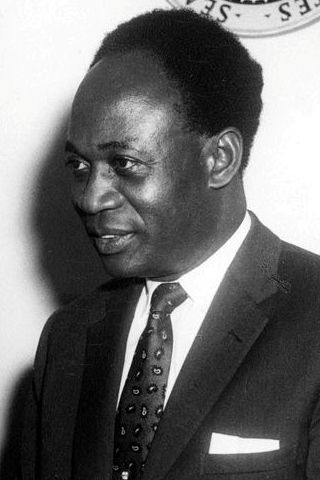
Abbie Rowe · Public domain · Wikimedia Commons
Kwame Nkrumah
1909 – 1972
Ghanaian politician and Pan-Africanist who led the Gold Coast to independence in 1957 and became the first prime minister and later president of Ghana. His rule included large-scale development plans, but also a one-party state and detention without trial; in 1966 he was removed by a coup.
PoliticsLiberation leaders & reformersAbbie Rowe · Public domain · Wikimedia Commons

Elliott & Fry · Public domain · Wikimedia Commons
Alan Turing
1912 – 1954
British mathematician and logician who laid a foundation for theoretical computer science with the Turing machine (1936) and helped break Enigma messages at Bletchley Park during the Second World War. In 1952 he was convicted for homosexual acts.
ScienceMathematics & computingElliott & Fry · Public domain · Wikimedia Commons

File:Bundesarchiv Bild 101I-299-1802-09, Michael Wittmann.jpg : Scheck derivative work: Georgfotoart · CC BY-SA 3.0 de · Wikimedia Commons
Michael Wittmann
1914 – 1944
German Waffen-SS tank commander in the Second World War. He is known above all for the ambush at Villers-Bocage on 13 June 1944, in which much of a British vanguard was destroyed in a short time. He was killed in Normandy on 8 August 1944; his reputation was strongly shaped by Nazi propaganda and later glorifying literature.
MilitaryTank commanders & tacticiansFile:Bundesarchiv Bild 101I-299-1802-09, Michael Wittmann.jpg : Scheck derivative work: Georgfotoart · CC BY-SA 3.0 de · Wikimedia Commons

Kingkongphoto & www.celebrity-photos.com from Laurel · CC BY-SA 2.0 · Wikimedia Commons
Nelson Mandela
1918 – 2013
Anti-apartheid activist who became South Africa's first democratically elected president after 27 years in prison.
PoliticsLiberation leaders & reformersKingkongphoto & www.celebrity-photos.com from Laurel · CC BY-SA 2.0 · Wikimedia Commons

Photographer unidentified. Retouched by TimofKingsland . · Public domain · Wikimedia Commons
Edmund Hillary
1919 – 2008
New Zealand mountaineer and explorer who, with Tenzing Norgay, made the first confirmed ascent of Mount Everest on 29 May 1953. Later he worked for Sherpa communities in Nepal.
ExplorationPoles, peaks & spacePhotographer unidentified. Retouched by TimofKingsland . · Public domain · Wikimedia Commons

MRC Laboratory of Molecular Biology · CC BY-SA 4.0 · Wikimedia Commons
Rosalind Franklin
1920 – 1958
British chemist and X-ray crystallographer whose X-ray images of DNA, including 'Photo 51', contributed to the discovery of the double helix. She then studied the structure of viruses such as the tobacco mosaic virus.
ScienceLife, medicine & earthMRC Laboratory of Molecular Biology · CC BY-SA 4.0 · Wikimedia Commons

dqd · CC0 · Wikimedia Commons
Kurt Knispel
1921 – 1945
German Wehrmacht gunner and tank commander in the Second World War. Post-war popular literature often calls him the most successful 'tank ace', crediting him with up to 168 destroyed tanks, but his former superior stated that such numbers cannot be verified. He was killed in Moravia on 28 April 1945.
MilitaryTank commanders & tacticiansdqd · CC0 · Wikimedia Commons

Yoichi Okamoto · Public domain · Wikimedia Commons
Martin Luther King Jr.
1929 – 1968
American Baptist minister and civil rights leader who organised non-violent resistance to racial segregation. He later explicitly linked equal civil rights to economic justice and criticism of war.
PoliticsLiberation leaders & reformersYoichi Okamoto · Public domain · Wikimedia Commons

Unknown author · Public domain · Wikimedia Commons
Neil Armstrong
1930 – 2012
American test pilot and astronaut who became the first person to walk on the Moon in July 1969. Apollo 11 resulted from a large, collective scientific and engineering effort.
ExplorationPoles, peaks & spaceUnknown author · Public domain · Wikimedia Commons

U.S. Department of State from United States · Public domain · Wikimedia Commons
Jane Goodall
1934 – 2025
British primatologist and conservationist known for long-term field research on chimpanzees in Gombe. She campaigned internationally for animal welfare, habitats and local communities.
ConservationAnimals & wildernessU.S. Department of State from United States · Public domain · Wikimedia Commons

Metro-Goldwyn-Mayer, Inc. Reproduction Number: LC-USZ6-2067 Location: NYWTS -- BIOG · Public domain · Wikimedia Commons
Elvis Presley
1935 – 1977
American singer and actor who from 1954 brought together rhythm and blues, country and gospel and so took rock and roll to a mass audience. He is called the 'King of Rock and Roll' and is one of the best-selling solo artists in history; estimates of his worldwide sales vary widely.
Arts & cultureMusicMetro-Goldwyn-Mayer, Inc. Reproduction Number: LC-USZ6-2067 Location: NYWTS -- BIOG · Public domain · Wikimedia Commons

Kingkongphoto & www.celebrity-photos.com from Laurel Maryland, USA · CC BY-SA 2.0 · Wikimedia Commons
Wangari Maathai
1940 – 2011
Kenyan biologist and activist who founded the Green Belt Movement in 1977, a movement that linked tree planting to women's rights and democracy. In 2004 she became the first African woman to receive the Nobel Peace Prize.
ConservationEnvironment & landscapeKingkongphoto & www.celebrity-photos.com from Laurel Maryland, USA · CC BY-SA 2.0 · Wikimedia Commons

Matthew Rolston; Distributed by Epic Records · Public domain · Wikimedia Commons
Michael Jackson
1958 – 2009
American singer, songwriter and dancer who broke through as a child with the Jackson 5 and in the 1980s made 'Thriller', the best-selling album of all time. He is called the 'King of Pop' and changed the music video, stage performance and the place of black artists in pop music. He was twice accused of child abuse; in 2005 a jury acquitted him on all counts.
Arts & cultureMusicMatthew Rolston; Distributed by Epic Records · Public domain · Wikimedia Commons

Richard Giles aka rich 115 · CC BY 2.0 · Wikimedia Commons
Steve Irwin
1962 – 2006
Australian wildlife keeper and television presenter who introduced a large audience to reptiles and conservation. His direct handling of wild animals was also discussed critically.
ConservationAnimals & wildernessRichard Giles aka rich 115 · CC BY 2.0 · Wikimedia Commons

Gage Skidmore · CC BY-SA 4.0 · Wikimedia Commons
Elon Musk
1971 – present
South African-born Canadian-American entrepreneur, founder of the space company SpaceX (2002) and chief executive of Tesla, which turned electric cars into a mass product. In 2022 he bought Twitter, which he renamed X, and in 2025 he led President Trump's cost-cutting project DOGE for several months. His statements and political role make him a highly polarising figure.
Industrialists & innovatorsTechnology & spaceflightGage Skidmore · CC BY-SA 4.0 · Wikimedia Commons